


You want a safe, effective exercise routine that fits your age, schedule, and fitness level — and you can start improving strength, flexibility, and cardiovascular health today. This post highlights the best health-focused exercise options this year, explains how to practice them safely, and shows simple ways to adapt routines for children, adults, and older adults.
Expect clear, practical steps for each top exercise, safety guidelines to prevent injury, and easy tracking tips to keep progress visible and motivating. Use the expert-backed resources and adaptations that follow to choose moves that match your goals and keep you active for the long term.
Overview of This Year’s Best Health Exercise
These exercises emphasize safety, measurable health gains, and easy adaptation across fitness levels. They prioritize cardiovascular health, joint mobility, balance, and scalable intensity.
Criteria for Selection
You should expect exercises chosen for this list to meet clear, evidence-based standards. Primary criteria include demonstrable improvement in cardiovascular endurance (measured by heart rate response or VO2 improvements), strength or functional capacity gains (progressive overload or repeated-practice metrics), and flexibility or mobility outcomes (range-of-motion improvements).
Safety criteria matter: low incidence of injury in supervised studies, minimal need for specialized equipment, and clear progressions from beginner to advanced levels. Accessibility counts too — exercises that you can perform at home, outdoors, or in community centers scored higher.
We also weighed adherence factors: enjoyment, session length (typically 20–45 minutes), and the ability to integrate with daily routines. Finally, suitability for clinical conditions (controlled hypertension, mild osteoarthritis, diabetes) and recommended frequency (3–5x weekly) influenced selection.
Key Health Benefits
You will gain measurable cardiovascular improvements such as lower resting heart rate and improved endurance when you follow these routines consistently. Expect better blood circulation and modest reductions in systolic and diastolic blood pressure with regular practice.
Strength and functional fitness improve through bodyweight, resistance-band, or light-weight progressions, helping with daily tasks like stair climbing and carrying groceries. Flexibility and joint range-of-motion enhance mobility and reduce stiffness, especially when sessions include dynamic warm-ups and cool-down stretches.
Balance and proprioception training reduce fall risk, important for older adults. Mental health benefits include reduced stress and improved mood via moderate aerobic activity and mindful-movement elements. Most benefits appear within 6–12 weeks with consistent effort.
Suitability for All Ages
You can adapt selected exercises to match age-related needs and fitness baselines. For children and adolescents, focus on play-based aerobic activities, coordination drills, and bodyweight strength moves; intensity stays intermittent and technique-focused.
For adults, programs emphasize a mix of aerobic conditioning, resistance for muscle mass preservation, and joint mobility work. Progressions use incremental resistance and volume changes to avoid overload.
For older adults, prioritize low-impact aerobic options (walking-based circuits, seated or standing low-resistance routines), targeted balance drills, and functional strength moves (sit-to-stand, step-ups) with emphasis on safety and supervision. Modify session length and rest intervals to account for recovery needs.
Safety Guidelines for Effective Health Exercise
Follow sensible precautions, prepare your body properly, and use proven strategies to avoid injuries. Focus on age-appropriate intensity, gradual progression, and consistent warm-up/cool-down habits.
Precautionary Measures for Different Age Groups
Children (5–17): Prioritize play-based, skill-focused activities that build coordination and aerobic fitness. Limit structured high-impact training; aim for at least 60 minutes daily of varied moderate-to-vigorous activity. Watch for fatigue, overheating, and poor technique—stop and rest when you see breathlessness, dizziness, or persistent pain.
Adults (18–64): Target 150–300 minutes per week of moderate activity or 75–150 minutes of vigorous activity, plus muscle- and bone-strengthening exercises two or more days weekly. Progress intensity by 10% per week and adjust if you have chronic conditions (high blood pressure, diabetes). Get medical clearance for new high-intensity programs or sudden symptom changes.
Older adults (65+): Emphasize balance, flexibility, and strength to reduce fall risk and preserve independence. Aim for aerobic activity at tolerable intensity, plus muscle-strength and balance training at least two days weekly. Modify exercises for joint pain or limited mobility and consult a clinician before starting if you have cardiac, pulmonary, or orthopedic issues.
Pregnancy and chronic conditions: Use low-impact options (walking, swimming, modified resistance) and follow provider guidance. Stop exercise and seek care for chest pain, severe shortness of breath, preterm contractions, or sudden fluid leakage.
Warm-Up and Cool-Down Techniques
Warm-up: Spend 5–10 minutes raising your core temperature and mobilizing joints before moderate-to-vigorous sessions. Start with light aerobic movement (walking, cycling) for 3–5 minutes, then perform dynamic stretches and movement patterns that mimic the main activity (leg swings, arm circles, bodyweight squats). Use progressive intensity to prepare cardiovascular and neuromuscular systems.
Cool-down: Allocate 5–10 minutes after exercise to lower heart rate and facilitate recovery. Finish with 2–3 minutes of light aerobic activity, then static stretches held 20–40 seconds for major muscle groups used. Add deep diaphragmatic breathing to reduce sympathetic drive and help remove metabolic byproducts.
Practical cues: Use perceived exertion and breathing as guides—if you can’t talk comfortably, reduce intensity. For sport-specific sessions, include one or two rehearsal drills during warm-up to practice technique under low load.
Injury Prevention Tips
Prioritize technique over load. Learn proper form for lifts, squats, and core exercises; use mirrors, a coach, or a qualified trainer to correct faults early. Increase weight, duration, or intensity gradually—follow the 10% rule for weekly progression as a guideline, not an absolute.
Use appropriate equipment and footwear for the activity and surface. Replace worn shoes every 300–500 miles or when cushioning degrades. For high-impact work, choose shock-absorbing surfaces or add cross-training days to reduce repetitive strain.
Listen to your body: distinguish brief muscular soreness from sharp, persistent, or joint-focused pain. Rest, apply ice or heat as indicated, and seek professional evaluation for swelling, loss of function, or pain that persists beyond a few days.
Include strength and balance work regularly to support joints and prevent falls. Schedule at least one full rest or active recovery day weekly to allow tissue repair and reduce overtraining risk.
Step-By-Step Guide to the Top Health Exercise
This guide gives the exact movements, breathing patterns, and session timing you should follow to get safe, measurable benefits. Each part emphasizes alignment, cadence, and progression so you can practice alone or with an instructor.
Essential Movements and Poses
Start with a 5–10 minute dynamic warm-up: marching in place, gentle hip circles, and shoulder rolls to raise heart rate and lubricate joints.
Perform these core movements in sequence, 8–12 reps each, progressing as you build strength.
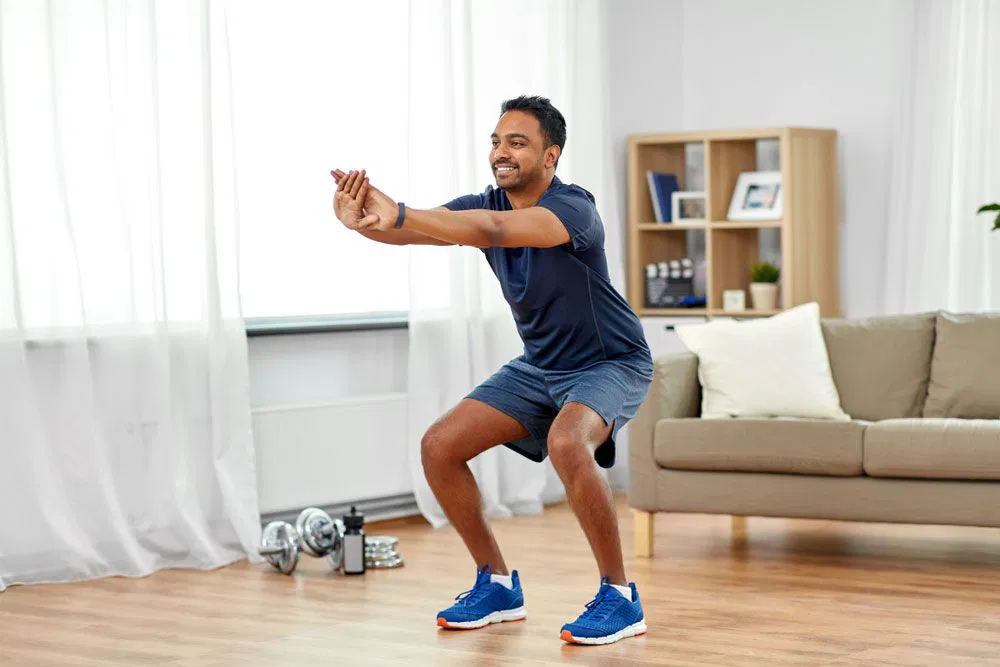
- Squat to chair: feet hip-width, knees aligned over toes, sit lightly on a chair then stand with weight in heels. Builds leg strength and balance.
- Modified plank: on forearms and knees, keep a straight line from shoulders to hips. Hold 20–40 seconds to strengthen core without excess lumbar load.
- Standing hip hinge: hinge at hips with slight bend in knees, keep a flat back, reach hands toward shins. Trains posterior chain for everyday lifting.
- Calf raises: hold onto a stable surface, raise onto toes, lower slowly. Improves ankle stability and gait.
- Cat–cow sequence: on hands and knees, alternate spine flexion and extension to restore mobility.
- Glute bridge: lie on back, knees bent, lift hips to align knees-hips-shoulders. Strengthens glutes and protects lower back.
Use controlled tempo: 2 seconds concentric, 2 seconds eccentric, 1-second pause where helpful. Increase difficulty by adding 2–5 kg or 5–10 more reps once form is flawless.
Proper Breathing Techniques
Coordinate breath with movement to maximize oxygen delivery and protect your spine. Exhale during the exertion phase (the harder part) and inhale during the easier return.
- Squat to chair: inhale as you lower, exhale as you stand up.
- Plank/holds: breathe evenly, using diaphragmatic breaths—expand your belly on the inhale, soften on the exhale.
- Calf raises/glute bridge: exhale at the top of the movement, inhale as you lower.
Practice box breathing for 30–60 seconds before sets if you feel anxious: inhale 4 seconds, hold 4 seconds, exhale 4 seconds, hold 4 seconds. Avoid breath-holding during lifts; the Valsalva maneuver increases blood pressure and can be risky if you have cardiovascular issues. If you feel dizzy or short of breath, stop and rest; reassess intensity.
Recommended Session Duration
Plan sessions based on your fitness level and recovery needs. A typical full-session format:
- Warm-up: 5–10 minutes
- Main circuit: 20–30 minutes (3 rounds of 6–8 exercises; 30–60 seconds work, 15–30 seconds rest)
- Cool-down and stretching: 5–10 minutes
Beginners should start with 2 sessions per week, 20–25 minutes each, and add one session every 1–2 weeks until reaching 3–4 weekly sessions. Intermediate exercisers aim for 30–45 minutes, 3–4 times weekly. Older adults or those with chronic conditions may prefer shorter sessions (15–25 minutes) with lower intensity and daily frequency for mobility. Track perceived exertion (RPE 1–10); target RPE 5–7 for main sets.
Adapting Health Exercise for Every Age
You will find practical ways to modify exercises, match intensity to abilities, and manage risks for children, adults, and seniors. Each age group needs targeted adjustments for safety, progression, and enjoyment.
Modifications for Children
Keep movements playful, focus on fundamental motor skills, and limit high-impact load. Use games, obstacle courses, or short circuit stations to teach running, hopping, throwing, and balance without long repetitive sets. Aim for intermittent activity: 10–15 minute bouts with varied tasks rather than continuous steady-state exercise.
Monitor intensity by talk test and perceived exertion: children should still be able to speak in short sentences during activity. Emphasize proper landing technique (soft knees, hips back) to protect growing joints. Avoid heavy resistance and high-volume repetitive loading; use bodyweight, light medicine balls, or resistance bands instead.
Encourage social and skill development. Rotate partners or small teams and include cooperative challenges to keep motivation high. Prioritize adequate warm-up play and cooldown stretching to reduce injury risk and support recovery.
Adjustments for Adults
Match training to your goals: cardiovascular endurance, strength, flexibility, or weight management. Use progressive overload for strength—3 sets of 8–12 reps with controlled tempo—or structured interval training for cardio, such as 30–60 second hard efforts followed by equal rest.
Balance joint-friendly options with impact work as tolerated. For example, alternate running days with cycling or swimming. Track load with objective markers: weekly training minutes, RPE (6–20 scale), and a recovery day every 7–10 days. Include core and hip stability exercises to reduce low-back and knee problems.
Schedule functional movements tied to daily life: squats, lunges, deadlifts (light to moderate), and overhead presses. Use a simple weekly plan: 2–3 strength sessions, 150 minutes moderate cardio, and daily mobility work to maintain long-term performance and resilience.
Special Considerations for Seniors
Prioritize balance, joint protection, and bone health while keeping intensity safe. Focus on multi-directional balance drills, sit-to-stand strength work, and weight-bearing activities like brisk walking or stair steps to stimulate bone density.
Reduce fall risk by training reaction time and single-leg stance, progressing from support to unsupported holds. Use low-load resistance band exercises and slow controlled lifts to build strength without excessive spinal or joint stress. Monitor medications that affect heart rate, blood pressure, or balance and adjust exercise intensity accordingly.
Keep sessions shorter but more frequent: 20–30 minutes most days, mixing strength, balance, and aerobic work. Ensure proper warm-up, shoe support, and clear space. If you have chronic conditions, work with a clinician or certified trainer to tailor safe progressions.
Tracking Progress and Maintaining Motivation
You will measure progress with simple, repeatable metrics and keep motivation with concrete routines and rewards. Focus on attainable targets, objective monitoring, and practical consistency strategies that fit daily life.
Setting Realistic Exercise Goals
Start with specific, time-bound targets you can verify. Instead of “get fitter,” set goals like “complete 30 minutes of mixed aerobic and strength senam three times per week for 6 weeks” or “improve single-leg balance from 10 to 30 seconds in eight weeks.” Write these goals down and set a start and review date.
Break larger aims into micro-goals. Use progressive overload: increase duration by 5–10 minutes, add one extra repetition, or advance to a slightly more dynamic senam routine every 2–4 weeks. Factor in recovery: schedule at least one rest or light-mobility day per week.
Make goals flexible for age and health. For children, prioritize skill and fun; for adults, combine cardio and strength; for seniors, emphasize balance and joint-friendly intensity. Adjust targets if illness or travel interrupts your plan.
Monitoring Improvements
Choose 3–5 measurable indicators to track consistently. Useful metrics include session duration, perceived exertion (Borg scale), step count, number of repetitions, and timed balance tests. Record values after each session in a simple log or app.
Use a weekly chart to visualize trends. A table example:
- Week — Sessions — Average Duration — Balance Time — Notes
Compare data every 2–4 weeks and note small wins like reduced breathlessness or increased repetitions. For seniors, include functional tests such as sit-to-stand count or timed up-and-go.
Include subjective measures. Log energy levels, sleep quality, and mood after sessions. These qualitative notes help identify what routines boost adherence and which cause soreness or fatigue.
Strategies for Staying Consistent
Create a predictable routine tied to daily anchors. Schedule senam immediately after a fixed event (e.g., after breakfast or before evening TV) to build habit through repetition. Keep sessions short but frequent: 15–30 minutes most days beats long sporadic workouts.
Use accountability tools. Pair with a friend, join a class, or use an app that sends reminders and tracks streaks. Public commitments (posting progress to a private group) increase follow-through for many people.
Design small rewards and contingency plans. Reward milestones with non-food treats like a new workout top or a massage. Plan low-effort alternatives for busy days (gentle chair-based senam or a 10-minute mobility set) so you never skip twice in a row.
Expert Recommendations and Resources
Experts emphasize practical, actionable support: get a certified assessment for your goals, use evidence-based tools for tracking progress, and connect with local or online communities for consistent motivation and safety.
Certified Trainer Insights
Work with trainers certified in community or clinical exercise (ACE, NASM, ACSM, or national sports federations) when you have health conditions or specific performance goals. Ask for a written initial assessment that includes mobility screening, cardiovascular risk stratification, and a progression plan with measurable milestones.
Request demonstrations and supervised practice for new moves, especially balance and resistance exercises. A certified trainer will modify intensity, rep ranges, and rest periods based on your age and fitness level. For seniors, insist on fall-risk screening and functional strength tests. For youth, prioritize technique and gradual load increases over maximal effort.
Useful Tools and Guides
Use validated tools: wearable heart-rate monitors (chest-strap or ECG-accurate wrist models) for intensity control, a reliable stopwatch or interval app, and a foam roller or resistance bands for warm-up and progression. Download evidence-based guides such as government physical-activity guidelines, ACSM position statements, or national health ministry handouts for reference.
Keep a simple log with date, activity type (e.g., aerobic, strength, balance), duration, perceived exertion, and any pain. Templates or apps that export CSV/printable pages help you share data with professionals. Look for instructional videos from reputable sources that show step-by-step technique rather than fast-paced routines.
Community Support Options
Join local community centers, senior centers, or school-based programs that offer supervised group classes like low-impact aerobics, yoga, or functional fitness. These settings often provide instructor-led sessions with emergency protocols and age-appropriate pacing.
If in-person options are limited, choose moderated online classes or platforms with certified instructors and participant feedback features. Seek peer groups—walking clubs, parent-child classes, or rehab-focused forums—that set regular meeting times and accountability. Verify that any community program requires instructor certification and has clear safety policies before you sign up.